BIS Prototype Validates XRP Ledger for Official Statistics Authentication
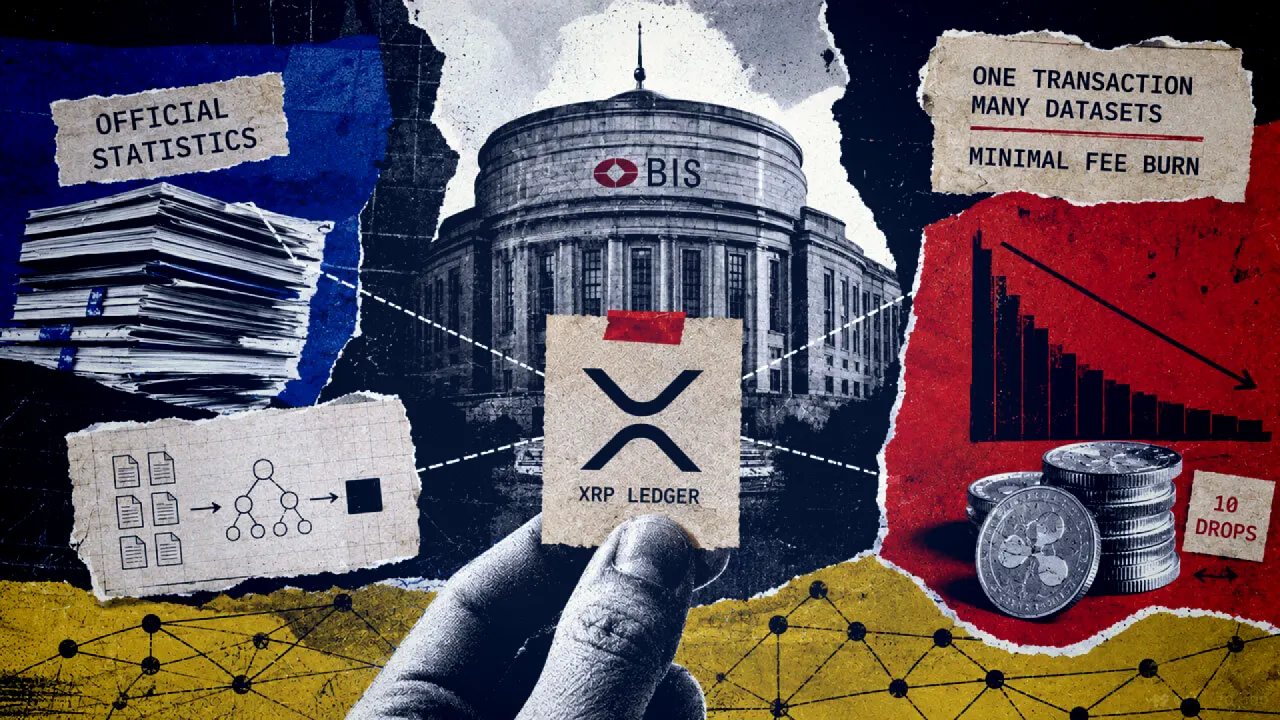
The Bank for International Settlements (BIS) has unveiled a working paper detailing a prototype that utilizes the XRP Ledger (XRPL) to authenticate official statistics. Released on September 2 as BIS Working Paper No. 1374, the document outlines how the system employs cryptographic fingerprints to ensure data integrity without storing the actual data on-chain.
The prototype addresses a significant gap in the SDMX standard, which is used for exchanging official economic and financial statistics. By generating cryptographic fingerprints via SHA3-512 hashing and organizing them into a Merkle tree, the system anchors the resulting root value directly onto the XRPL. This method allows for a single ledger entry to represent thousands of datasets, thus preserving confidentiality while ensuring authenticity.
The paper indicates that the median publication latency for the system was between three to five seconds, with verification taking one to two seconds. Notably, the XRP token itself was not used as an asset within the system; instead, it served merely as a transaction cost, with each anchoring transaction carrying a minimal fee of 10 drops (approximately 0.00001 XRP).
The authors of the paper emphasize that while the prototype demonstrates XRPL's capability as a low-cost authentication layer, it does not imply that the BIS has adopted the network for official operations. Furthermore, the findings suggest that the direct burn of XRP through transaction fees remains limited, as the batching of datasets reduces the on-chain commitments required for authentication.
In summary, while the BIS's work establishes a credible institutional use case for the XRP Ledger, it also indicates that the anticipated supply squeeze for XRP holders may not materialize as expected, given the current fee mechanics and operational design of the prototype.
FAQ
What is the purpose of the BIS prototype using the XRP Ledger?
The BIS prototype aims to authenticate official statistics by utilizing the XRP Ledger to generate cryptographic fingerprints that ensure data integrity without storing the actual data on-chain.
How does the prototype ensure data integrity?
The prototype employs SHA3-512 hashing to create cryptographic fingerprints, which are organized into a Merkle tree. The root value of this tree is then anchored onto the XRP Ledger, allowing for secure representation of datasets.
What are the transaction costs associated with the prototype?
The prototype uses the XRP token merely as a transaction cost, with each anchoring transaction carrying a minimal fee of 10 drops, which is approximately 0.00001 XRP.
Does the BIS plan to adopt the XRP Ledger for official operations?
No, the paper emphasizes that while the prototype demonstrates the XRPL's capabilities, it does not imply that the BIS has adopted the network for official operations.
What implications does the prototype have for XRP holders?
The findings suggest that the anticipated supply squeeze for XRP holders may not materialize as expected, due to the current fee mechanics and the operational design of the prototype, which reduces on-chain commitments.
Comments
Comments are moderated before publish.
No comments yet — be the first.