Ethereum Foundation Establishes 2029 Deadline for Quantum Resistance
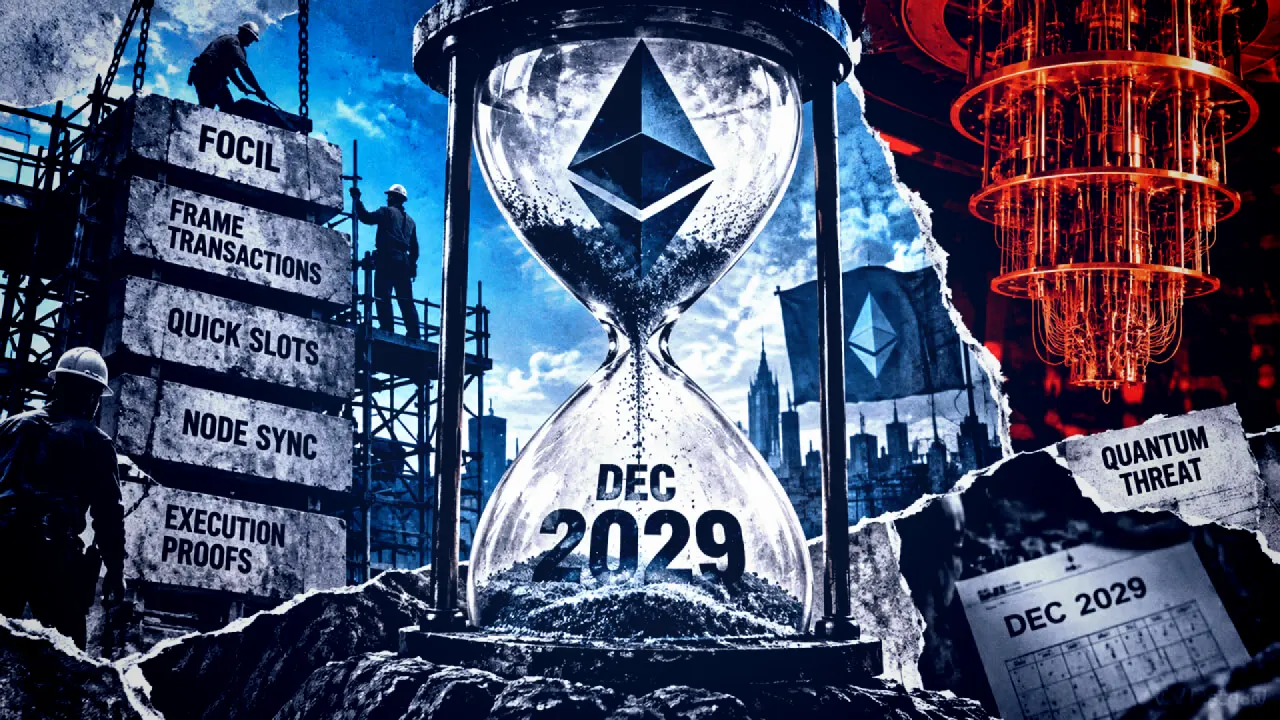
The Ethereum Foundation is actively working to ensure that Ethereum becomes quantum-resistant by December 2029. This deadline is not merely a goal but a fixed target, as outlined by the Foundation's Protocol cluster. As the network prepares for future upgrades, developers are increasingly constrained by this timeline, which emphasizes the urgency of enhancing Ethereum's execution, consensus, and data layers.
On September 7, the Protocol cluster announced that the deadline would remain non-negotiable until a review with external experts in January 2027. This has led to a competitive environment where optional features must now align with the essential engineering work needed to fortify Ethereum against quantum threats.
The upcoming Hegotá upgrade, following Glamsterdam, will focus on two key features: FOCIL, aimed at strengthening transaction inclusion guarantees, and Frame Transactions, which introduces a new model for account transactions. These upgrades are critical in providing Ethereum with a pathway to replace cryptographic methods that could be compromised by future quantum attacks.
The Foundation's approach is aggressive, aiming for a full quantum-resistance implementation across the network by December 2029. This timeline aligns with similar targets set by major tech companies like Google, Cloudflare, and Microsoft, all of which are preparing for the potential arrival of quantum computing capabilities that could disrupt current cryptographic standards.
As part of the planning process, the Foundation has evaluated 62 proposals for the Hegotá upgrade, categorizing them into tiers based on their importance and feasibility. The urgency of the quantum threat is shaping which features will be prioritized, with the goal of ensuring that Ethereum remains secure and operational as advancements in quantum technology continue to evolve.
Updated 12:02 UTC
New Developments in Blockchain Security
Harmony Protocol has decided to wind down due to concerns over threats from state actors and AI agents. The project, launched in 2019, will migrate to Ethereum, hoping for improved safety for its ONE token.
On August 11, Harmony experienced a significant exploit that led to the unauthorized minting of 3 trillion native ONE tokens, prompting a rollback to restore its pre-hack state. Following this incident, the price of ONE dropped over 40% in the past month.
In 2022, Harmony suffered a devastating $100 million hack of its Horizon bridge, and its total value locked (TVL) has plummeted from over $1 billion to just $150,000 today.
The migration to Ethereum will involve a snapshot of user balances, with tokens airdropped to the corresponding wallet addresses on Ethereum. However, tokens in smart contracts will not be migrated, and users have been given three days to withdraw such funds.
As part of its transition, Harmony is pivoting to become "the remix economy for AI video," aiming to generate significant advertising revenue.
Despite the migration, Ethereum has also faced numerous security incidents, with 153 out of 344 reported incidents in the first half of 2026 occurring on its network. This rise in exploits is suspected to correlate with the emergence of powerful AI models.
Ultimately, the safety of projects on Ethereum depends on the quality of their code, regardless of the underlying blockchain's security.
FAQ
What is the deadline set by the Ethereum Foundation for achieving quantum resistance?
The Ethereum Foundation has set a deadline of December 2029 to achieve quantum resistance.
Why is the December 2029 deadline considered non-negotiable?
The deadline is considered non-negotiable because it emphasizes the urgency of enhancing Ethereum's security against potential quantum threats, and it will remain fixed until a review with external experts in January 2027.
What are the key features being focused on in the upcoming Hegotá upgrade?
The key features in the upcoming Hegotá upgrade include FOCIL, which aims to strengthen transaction inclusion guarantees, and Frame Transactions, which introduces a new model for account transactions.
How many proposals has the Ethereum Foundation evaluated for the Hegotá upgrade?
The Ethereum Foundation has evaluated 62 proposals for the Hegotá upgrade, categorizing them based on their importance and feasibility.
Which major tech companies are also preparing for quantum computing threats?
Major tech companies like Google, Cloudflare, and Microsoft are also preparing for the potential arrival of quantum computing capabilities that could disrupt current cryptographic standards.
Comments
Comments are moderated before publish.
No comments yet — be the first.