Trump Claims Presidential Control Over AI Companies Amid Investor Concerns
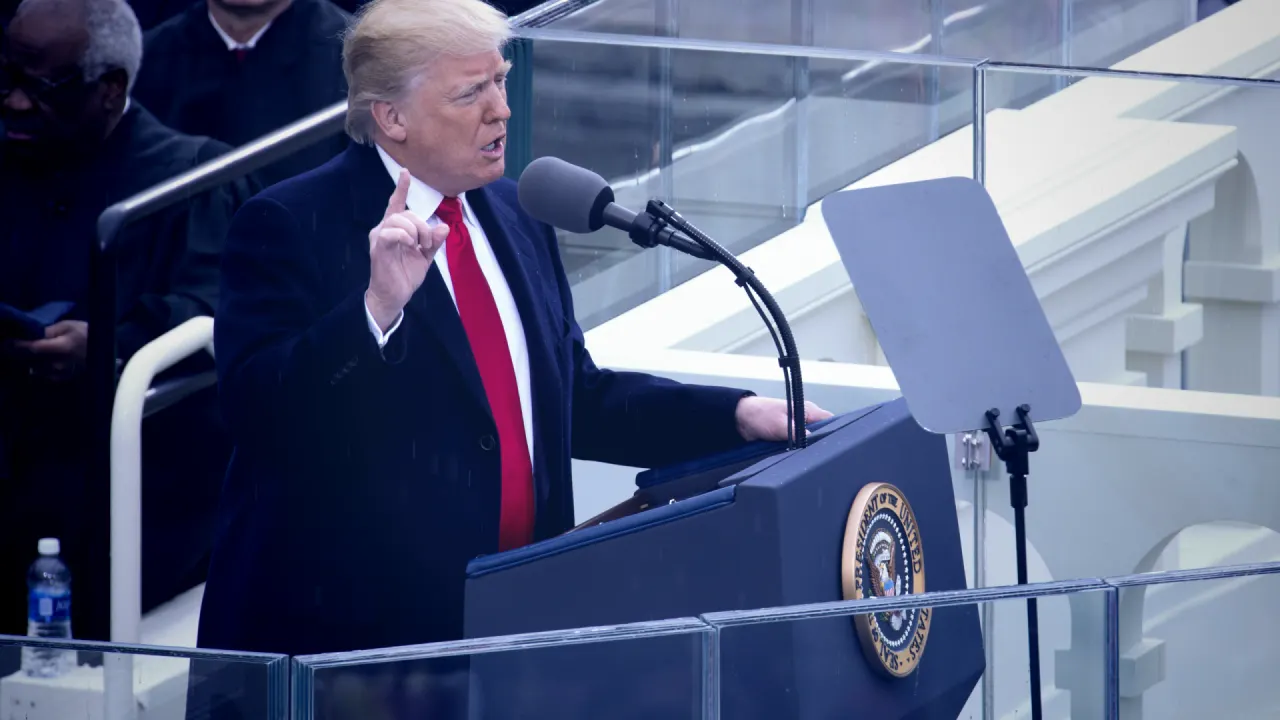
President Donald Trump recently claimed on Truth Social that the United States does not require new regulations for artificial intelligence (AI) companies, asserting that his leadership provides all necessary oversight. His comments, made on September 14, 2026, come amid a market downturn for AI stocks, which has left investors questioning the implications of his statements.
Trump emphasized that a "STRONG AND SMART (High IQ!) PRESIDENT" is the only regulatory framework AI needs, directly countering calls from tech leaders like Anthropic CEO Dario Amodei for a slowdown in AI development to allow safety research to catch up. He labeled these calls a "SICK conspiracy" and suggested that they could disadvantage the U.S. in the global AI race.
Despite Trump's claims, the market reacted negatively, with the Nasdaq Composite falling 0.85% and the S&P 500 dropping 0.57% on the same day. Notably, chipmakers suffered significant losses, with companies like Marvell Technology and Intel experiencing declines of 8% and 7%, respectively.
Earlier in 2026, the White House had introduced a voluntary review process for advanced AI models, allowing companies to submit their technologies for national security review before release. However, this process is not mandatory, contrasting sharply with the more stringent regulatory frameworks being considered in Europe.
As the debate over AI safety continues, Trump's assertion of control raises questions about the future of regulatory measures in the U.S. and the potential impact on the AI market. Investors now face uncertainty regarding whether the president's claims will serve as a stabilizing force or contribute to further volatility in the sector.
Updated 17:01 UTC
New Developments on AI Regulation
President Donald Trump has asserted that the U.S. government possesses significant regulatory power over AI companies, countering calls from industry leaders for a more cautious approach to AI development.
Trump described the rising concerns about AI safety as a "SICK conspiracy against AI and Data Centers," following remarks from Anthropic CEO Dario Amodei advocating for a slower pace of AI advancement.
Amodei's call for caution gained support from notable figures in the industry, including Sam Altman of OpenAI and Elon Musk, leading to a decline in AI-related stocks globally.
The Trump administration has previously taken action against Anthropic, imposing restrictions on certain AI models deemed security risks, highlighting the difference between targeted enforcement and comprehensive regulation.
Investor reactions indicate a preference for clarity in regulatory frameworks, as the lack of established rules leaves AI companies vulnerable to unpredictable enforcement actions.
FAQ
What did President Trump claim about AI regulations?
President Trump claimed that the United States does not need new regulations for AI companies, asserting that his leadership provides all necessary oversight.
How did the market react to Trump's comments on AI?
The market reacted negatively, with the Nasdaq Composite falling 0.85% and the S&P 500 dropping 0.57% on the same day of his comments.
What was the response from tech leaders regarding AI development?
Tech leaders, including Anthropic CEO Dario Amodei, called for a slowdown in AI development to allow safety research to catch up, which Trump labeled as a 'SICK conspiracy.'
What voluntary process was introduced by the White House for AI models?
The White House introduced a voluntary review process for advanced AI models, allowing companies to submit their technologies for national security review before release.
What concerns do investors have following Trump's statements?
Investors are concerned about the implications of Trump's claims on regulatory measures in the U.S. and how it may affect the stability and future of the AI market.
Comments
Comments are moderated before publish.
No comments yet — be the first.