U.S. Treasury Sets 2028 Deadline for Offshore Stablecoin Access to U.S. Customers
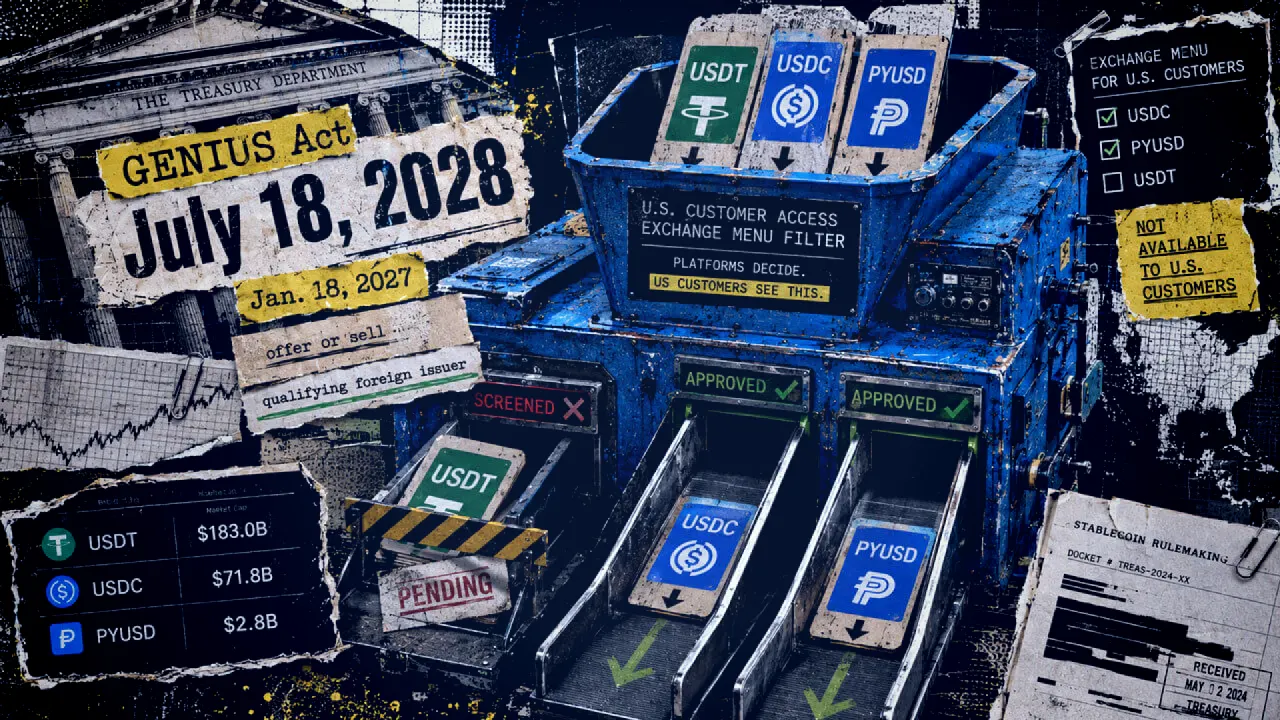
The U.S. Treasury Department has unveiled a proposal under the GENIUS Act that will significantly impact the availability of offshore stablecoins to U.S. customers. By July 18, 2028, digital asset service providers will be prohibited from offering or selling payment stablecoins to individuals in the United States unless the issuer meets specific regulatory criteria.
This proposal does not prevent offshore tokens from circulating internationally or moving between private wallets; instead, it focuses on how regulated businesses can distribute these tokens within the U.S. The initial phase of the regulations will take effect on January 18, 2027, requiring companies to comply with the GENIUS regime before issuing payment stablecoins in the U.S.
As part of the new rules, exchanges and custodians will need to verify the legal status of stablecoin issuers, which may include examining smart contracts to ensure compliance with U.S. laws. This regulatory framework aims to streamline the market but may also lead to reduced consumer choice as exchanges opt for easier compliance paths.
Notably, Tether’s USDT, which is currently accessible to U.S. customers, may face challenges under these new regulations. The company has already initiated steps toward compliance, including the launch of a federally regulated dollar stablecoin, USA₮. The upcoming regulations will require careful navigation by issuers and exchanges to maintain access to the U.S. market.
Updated 12:30 UTC
New Developments in Stablecoin Market
- Tether invested $134 million in NovaBay, transforming it into a stablecoin holding company named Stablecoin Development Corporat.
- Stablecoin Development Corporat acquired and staked a significant amount of USDS, a decentralized stablecoin pegged to the US dollar.
- USDS operates through overcollateralized vaults and automated liquidations, contrasting with centralized stablecoins like Tether and USDC.
- Stablecoin Development Corporat's share price has dropped from nearly $2.00 to $1.00 despite initial gains following the merger announcement.
- The company's projected revenue growth for USDS of 81% has not materialized, raising concerns about its financial health.
- Michael Kazley, the CEO, is a primary investor in the new entity, while Tommy Law, the CFO, has faced criticism for his lack of qualifications.
- The board of directors includes individuals with no prior experience in cryptocurrencies, raising questions about their qualifications for the roles.
- Stablecoin Development Corporat is currently navigating a challenging cryptocurrency market, with uncertain prospects for future growth.
Updated 13:01 UTC
New Developments in Tokenized US Treasury Products
J.P. Morgan’s tokenized US Treasury products have seen a significant increase in market cap, rising from $300 million to $884.6 million since late May 2023.
The bank's two main offerings, the JLTXX and MONY money market funds, now collectively manage over $900 million in assets.
The total market for tokenized US Treasuries has surpassed $15 billion, with J.P. Morgan holding a substantial share of this market.
JLTXX was launched on May 13, 2026, with an initial $100 million investment, while MONY was introduced in December 2025, also starting with $100 million.
Both funds operate on the Ethereum blockchain, allowing token holders to own shares represented by on-chain addresses.
In August alone, the products added $100 million in market cap, with a notable $17.2 million increase in just one week.
These funds enable institutional investors to transact with a minimum subscription of $1 million using cash or stablecoins like USDC, with real-time on-chain settlement.
The competitive landscape for tokenized Treasuries is intensifying, with firms like BlackRock and Securitize also targeting institutional investments.
JLTXX is designed to meet the reserve asset requirements of the GENIUS Act, allowing stablecoin issuers to hold reserves in a tokenized fund for efficient exposure.
FAQ
What is the GENIUS Act and how does it affect offshore stablecoins?
The GENIUS Act is a proposal by the U.S. Treasury Department that sets a deadline of July 18, 2028, for offshore stablecoin issuers to comply with specific regulatory criteria to offer their tokens to U.S. customers. It aims to regulate how digital asset service providers can distribute payment stablecoins within the U.S.
When do the new regulations under the GENIUS Act take effect?
The initial phase of the regulations will take effect on January 18, 2027, requiring companies to comply with the GENIUS regime before they can issue payment stablecoins in the U.S.
Will offshore stablecoins still be able to circulate internationally?
Yes, the proposal does not prevent offshore tokens from circulating internationally or moving between private wallets; it specifically targets how regulated businesses can distribute these tokens within the U.S.
What are the compliance requirements for exchanges and custodians under the new rules?
Exchanges and custodians will need to verify the legal status of stablecoin issuers, which may include examining smart contracts to ensure compliance with U.S. laws as part of the new regulatory framework.
How might the new regulations impact Tether's USDT?
Tether's USDT, currently accessible to U.S. customers, may face challenges under the new regulations. The company has begun steps toward compliance, including launching a federally regulated dollar stablecoin, USA₮, to navigate the upcoming regulatory landscape.
Comments
Comments are moderated before publish.
No comments yet — be the first.