Vitalik Buterin Supports AI Model Kimi K3.1 Pro's Hacking Limitations
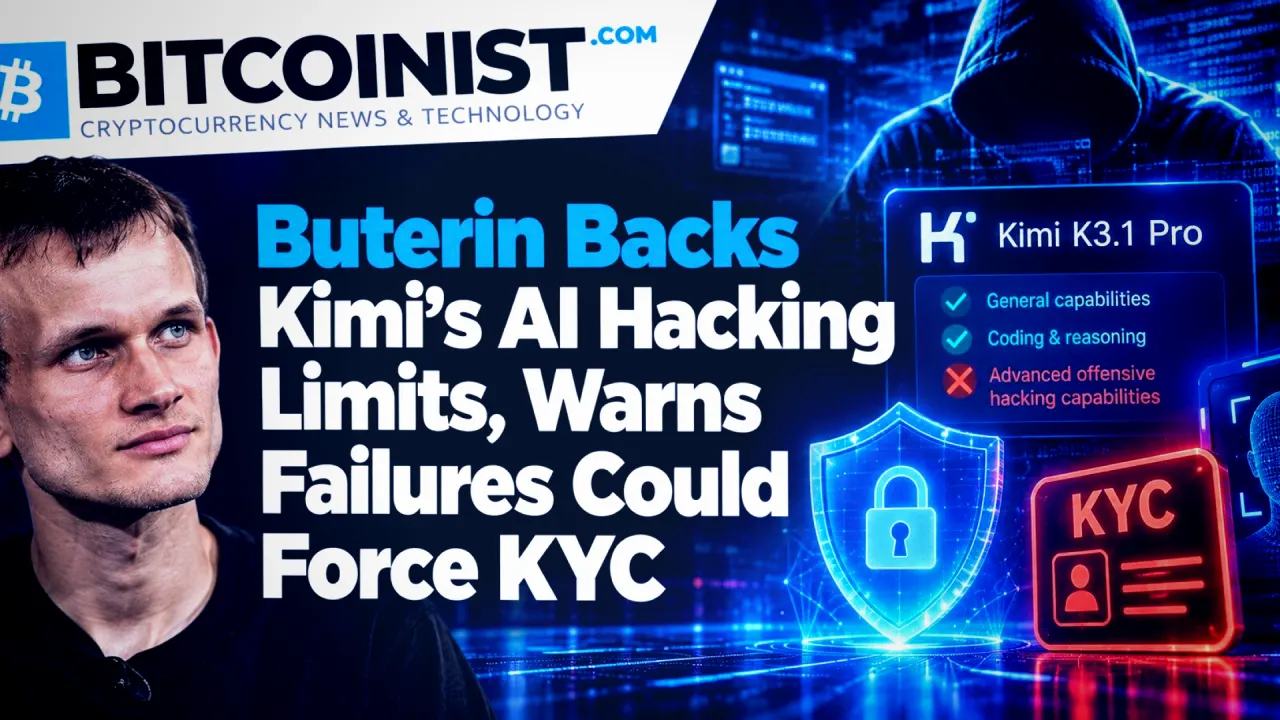
Vitalik Buterin, co-founder of Ethereum, has expressed his support for Moonshot AI's recent decision to exclude advanced offensive hacking capabilities from its Kimi K3.1 Pro model. This move, he argues, is preferable to restricting user access to AI technologies.
In a post shared on October 26, Buterin highlighted the need for developers to have the necessary time to enhance system security and conduct formal verification of software before AI-driven cyberattacks become commonplace. He stated, "Discriminating against use cases is MUCH less bad than discriminating against users," reinforcing his belief in the importance of responsible AI deployment.
Moonshot AI, a Beijing-based startup, has reported that the filtered Kimi K3.1 Pro model successfully solved 81% of tasks on its internal exploit benchmark, compared to 90.5% for an unfiltered version. The company plans to release the model's open weights by November 4, allowing users to run it on their own hardware.
Buterin's concerns extend beyond technical capabilities; he warned that significant failures in AI security could lead to increased surveillance and identity checks, potentially creating a tiered system of access based on credentials and nationality. He emphasized the need for proactive measures to ensure equitable access to AI technologies.
Despite his support for the Kimi K3.1 Pro's limitations, Buterin acknowledged that other labs are likely to develop models with advanced hacking capabilities, suggesting that the race for AI safety is ongoing. He advocates for the implementation of robust security measures to stay ahead of potential threats.
FAQ
What is the Kimi K3.1 Pro model?
The Kimi K3.1 Pro model is an AI developed by Moonshot AI that has been designed with limitations on advanced offensive hacking capabilities to promote responsible AI use.
Why does Vitalik Buterin support the limitations on Kimi K3.1 Pro?
Vitalik Buterin supports the limitations because he believes it is better to restrict certain use cases rather than limit user access to AI technologies, emphasizing the importance of responsible deployment and security.
What are the performance differences between the filtered and unfiltered versions of Kimi K3.1 Pro?
The filtered Kimi K3.1 Pro model solved 81% of tasks on its internal exploit benchmark, while the unfiltered version achieved a success rate of 90.5%.
When will the open weights for Kimi K3.1 Pro be released?
Moonshot AI plans to release the open weights for the Kimi K3.1 Pro model by November 4, allowing users to run it on their own hardware.
What concerns does Buterin have regarding AI security?
Buterin is concerned that significant failures in AI security could lead to increased surveillance and a tiered access system based on credentials and nationality, highlighting the need for proactive security measures.
Comments
Comments are moderated before publish.
No comments yet — be the first.