Iran Appeals to UN Against US Sanctions, Labels Them Economic Terrorism
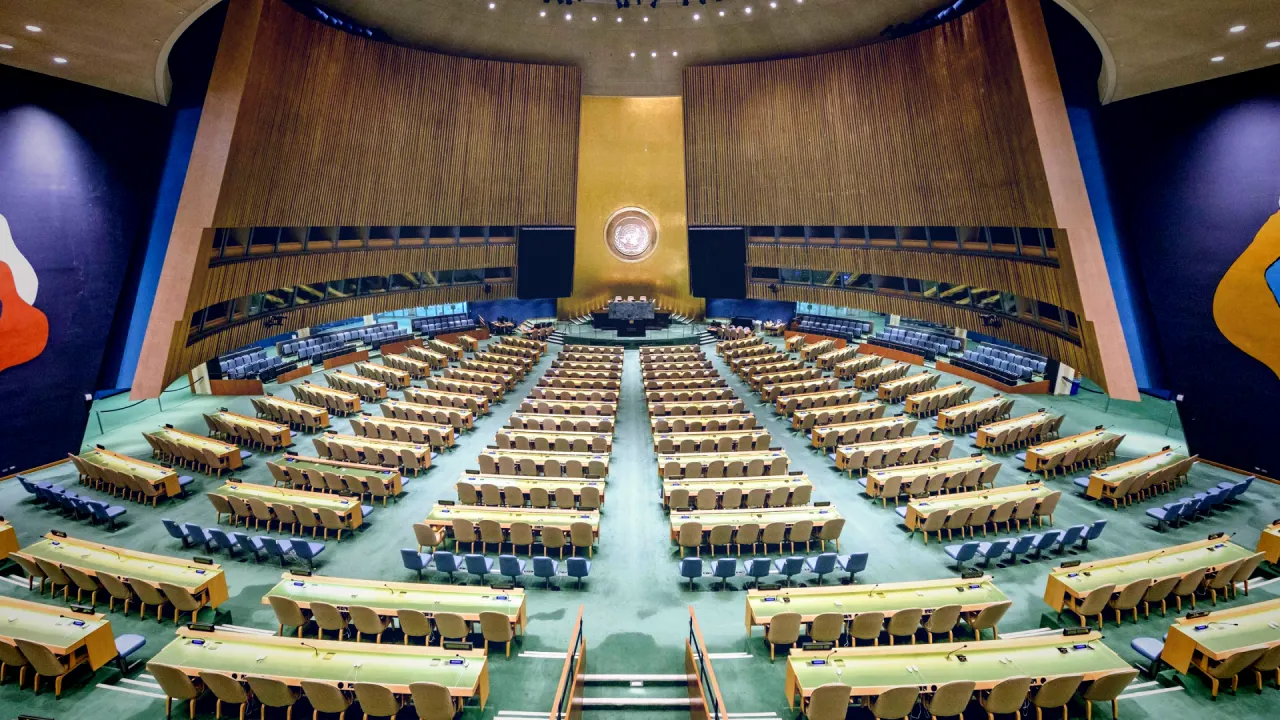
Iranian Foreign Minister Abbas Araghchi has formally requested that the United Nations condemn the United States for its latest sanctions campaign, termed “Operation Economic Outcast.” In letters addressed to UN Secretary-General Antonio Guterres, the Security Council president, and UN member states, Araghchi labeled the U.S. actions as “economic terrorism.”
This diplomatic move highlights the ongoing tension between the U.S. and Iran, particularly following the unilateral reinstatement of sanctions by Washington. The U.S. Treasury’s recent campaign targets key sectors of the Iranian economy, including oil, finance, and technology, thereby elevating economic pressure on Tehran.
Key Takeaways
- Araghchi’s appeal to the UN indicates heightened diplomatic tensions between Iran and the U.S., which could lead to a more aggressive stance on Iran's nuclear program.
- Market pricing suggests an increased likelihood of Iran pursuing nuclear development before 2027.
- The U.S. sanctions, described by Iran as “economic terrorism,” may escalate economic and diplomatic conflicts.
What to Watch
- Monitor reactions from the UN and member states to Iran’s plea for condemnation.
- Further announcements from the U.S. regarding sanctions or diplomatic efforts will be crucial.
- Developments from the International Atomic Energy Agency regarding Iran’s nuclear compliance could provide key indicators for future nuclear development prospects.
Updated 19:02 UTC
New Developments
Qatar’s Prime Minister and Foreign Minister, Mohammed bin Abdulrahman bin Jassim Al Thani, is scheduled to visit Tehran on Thursday to discuss de-escalating tensions between the U.S. and Iran. This visit is part of ongoing diplomatic efforts amid the U.S.-Iran conflict in the Persian Gulf and the Strait of Hormuz.
The discussions aim to facilitate dialogue and ensure freedom of navigation in the region. Qatar is actively involved in mediating proposals to resume talks between the two nations.
Market analysts suggest that there is an increased likelihood of diplomatic meetings, particularly with a focus on a timeline extending to September 30, 2026.
Observers are keenly watching for statements from the meeting, as these could significantly influence market perceptions regarding potential U.S.-Iran peace talks.
Updated 19:32 UTC
New Developments on Iran's Fuel Crisis
As of August 24 and 25, 2026, long lines have formed at petrol stations in Tehran, where drivers are limited to filling a maximum of 20 liters per vehicle due to a severe gasoline shortage.
This crisis is attributed to a US naval blockade that was reimposed on July 14, 2026, which has cut off Iran's ability to import refined fuel, exposing vulnerabilities in the country's fuel supply system.
Iran produces approximately 121 million liters of gasoline daily but consumes around 135 million liters, creating a daily shortfall of 14 to 15 million liters that was previously covered by imports.
Compounding the issue, US and Israeli strikes earlier in 2026 have damaged Iranian refining infrastructure, further reducing domestic output.
Iranian President Masoud Pezeshkian had warned of potential fuel rationing as early as May 2026, indicating that officials were aware of the looming crisis before the blockade was fully enacted.
In response to the situation, Iranian authorities have imposed per-vehicle filling limits to manage demand amidst tightening supplies, with formal rationing remaining a possibility.
Updated 19:32 UTC
New Developments on US Actions Against Iranian Oil
- The US government is reviving a Civil War-era maritime court, known as a prize court, to expedite the capture of Iranian oil tankers as US prizes.
- This legal mechanism allows nations to seize enemy vessels and adjudicate ownership through specialized courts, a practice last significantly utilized during the Spanish-American War.
- In 2025 and 2026, US authorities have intensified civil forfeiture actions against Iranian oil cargoes, with multiple cases filed in federal courts linked to the Islamic Revolutionary Guard Corps.
- Recent seizures include the tanker M/T Skipper, which was carrying approximately 1.89 million barrels of Venezuelan crude associated with Iran, and vessels Tifani and Phonix intercepted near Sri Lanka.
- The legal authority for these prize captures is rooted in Article I, Section 8 of the US Constitution, which grants Congress the power to make rules concerning captures on land and water.
- Proceeds from previous forfeitures have been directed to the US Victims of State Sponsored Terrorism Fund, linking seized Iranian assets to compensation for terrorism victims.
- Legal experts are divided on the implications of reviving prize law; some view it as necessary for enforcement, while others caution against normalizing wartime legal instruments in peacetime.
- China and India continue to be the largest buyers of Iranian crude and do not recognize US secondary sanctions on their trade.
Updated 20:04 UTC
New Developments in Iran-US Relations
- Iran has announced its consideration of pre-emptive strikes against U.S. interests if it perceives a threat, indicating a significant escalation in tensions.
- This statement challenges the United States’ influence over conflict escalation in the region.
- The Iranian response emphasizes its refusal to allow Washington to dictate terms in any potential conflict.
- Market pricing on the likelihood of Iran Reconstruction Funding being part of a US-Iran deal in 2026 has decreased to 14.5%, down from 22% a week ago.
- President Trump’s strategy of economic warfare may not de-escalate tensions, as suggested by Iran’s recent statements.
- Observers are advised to monitor Iran’s stance and its potential impact on ongoing negotiations and U.S. diplomatic or military strategies.
FAQ
What is Iran's appeal to the UN regarding US sanctions?
Iranian Foreign Minister Abbas Araghchi has requested the United Nations to condemn the United States for its sanctions campaign, which he labeled as 'economic terrorism.'
What are the key sectors targeted by the US sanctions on Iran?
The US sanctions target key sectors of the Iranian economy, including oil, finance, and technology.
How might Iran's appeal to the UN affect its nuclear program?
Araghchi's appeal indicates heightened diplomatic tensions, which could lead to a more aggressive stance on Iran's nuclear program and an increased likelihood of pursuing nuclear development before 2027.
What should be monitored following Iran's appeal to the UN?
It is important to monitor reactions from the UN and member states, as well as any further announcements from the US regarding sanctions or diplomatic efforts.
What role does the International Atomic Energy Agency (IAEA) play in this situation?
Developments from the International Atomic Energy Agency regarding Iran's nuclear compliance could provide key indicators for future nuclear development prospects.
Comments
Comments are moderated before publish.
No comments yet — be the first.